Hampton Roads agencies that provide long-term support for people experiencing housing insecurity and homelessness are rushing to come up with alternatives in light of new caps on federal housing funds.
The U.S. Department of Housing and Urban Development opened up grant proposals for homelessness assistance money on Nov. 13, just after the government shutdown ended.
Federal funding for permanent supportive housing is not capped at any percentage and amounts to about 90% of nationally distributed funds. But unlike previous years, HUD’s 2025 grant cycle limits it to 30% of the $3.9 billion proposed.
President Donald Trump’s administration is redirecting funds to transitional housing assistance that includes work and treatment requirements, part of a shift in federal housing policy.
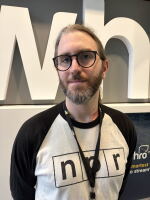
The announcement left organizations such as the LGBT Life Center, with offices in Norfolk and Hampton, scrambling. Julie Snell, who oversees the organization’s housing program, said it gave them a month and a day to prepare a grant proposal.
“None of the continuums of care across the country were ready to do a competition because we were told it was a two-year thing,” Snell said.
Twenty states sued the Trump administration over the changes. The lawsuit, filed Nov. 25, calls the funding conditions “unlawful several times over” and says they’ll “jeopardize stable, long-term housing options for tens of thousands.” A separate lawsuit led by the National Alliance to End Homelessness was filed Monday.
For the LGBT Life Center, more than 60 households served by the organization are in jeopardy across Hampton Roads.
The center gets about $1.5 million annually for permanent supportive housing, which provides assistance for people who have often experienced homelessness for a long period of time and also have some type of disability, mental health or substance abuse disorder or are living with HIV.
“These are your folks that have the highest needs,” Snell said.
Snell is working fast to change the Life Center’s decades-old program to fit a transitional housing model preferred by the Trump administration. Transitional housing limits people to a maximum of 24 months of assistance, and Snell said it can also require clients to participate in support and treatment programs up to 40 hours a week. U.S. HUD Secretary Scott Turner said the policy direction will promote independence and self-sufficiency by putting an end to “incentivized never-ending government dependency.”
But Snell said many of the people in permanent supportive housing programs have limited ability to increase their income. They can be older adults living off of Social Security or children and families with chronic disabilities.
“They’re not going to go out and be able to get a full-time job and be able to afford fair-market rent in this area,” Snell said. “The rates of homelessness for people that are 55 and better are going to be a dramatic increase; the rates of homelessness for families that have minor children is going to dramatically increase.”
HUD’s new restrictions also limit funding for organizations that serve transgender or nonbinary individuals, which calls into question whether a restructured housing program by the Life Center that prioritizes transitional housing would get any funding at all.
While serving the LGBTQ+ community is a core part of the Life Center’s mission, the organization does not discriminate based on sexuality, gender identity or health status. It was founded in 1989 as CANDII House by Sister Mary Joan Kentz, a nun from Norfolk-based Sacred Heart Catholic Church, serving children and families living with HIV.
“There’s never been a time where we said we can’t serve you because you’re not part of this community,” Snell said. “The federal government believing that there’s agencies out here that are discriminating against all of these protected factors is really fascinating because it’s not in the mission, it’s not what we do.”
Losing housing support, though, will have a concentrated impact for the LGBTQ+ community in Hampton Roads, especially transgender and nonbinary people. That community faces higher rates of housing insecurity and discrimination nationally compared to the general population.
Despite the challenges, Snell said the Life Center isn’t giving up. She’s continuing to do what she can to house and help clients.
“Any type of donations to LGBTQ+ service organizations, like LGBT Life Center, like Calos Coalition, like (the Southeastern Transgender Resource Center), like TAP VA, mean the world,” Snell said. “Every penny helps because it means we’re still able to provide services in a world that doesn’t want to help provide them.”