

Fall and Winter are busy seasons for many retailers, including Scotland House in Williamsburg's Merchant Square.
The colder temperatures make the store’s selection of Scottish worsted wool or Scottish and Irish tweed a convincing purchase. Amy Miller, however, sees it as an opportunity to connect to a region she adores.
Miller said Scotland House sparks fond memories of when her son was studying for his master’s degree in Wales. She said she stops by the store every time she visits Williamsburg from Richmond.
“We spent a lot of time in Ireland and Scotland, and we're just obsessed with the place.”
Manager Alan Stello hears that sentiment often.

He started with Scotland House in 2020, when he moved his family to Williamsburg from Charleston, South Carolina. Stello said, aside from sales, the work feels similar to what he did as director of the Powder Magazine Museum.
“It's very culture driven between tweeds, handwoven in Scotland, family history and names,” Stello said. “They want to know some little tidbit about the past and the community and make a connection to that in some meaningful way.”
Scotland House was created in 1970 by Thomas and Katherine Magruder. They moved to Williamsburg from Arlington, where they owned a business by the same name. The store is now owned by Sam Wallace and his family.
It’s known for its imported tweed, a twilled wool fabric likely originating in rural Scotland and Ireland, as well as its tartan kilts and other products. Like tweed, tartans have deep Scottish roots, but only in the last few hundred years have specific patterns become associated with clans and families. Now, tartans are registered for Irish counties, U.S. states and even public safety agencies.
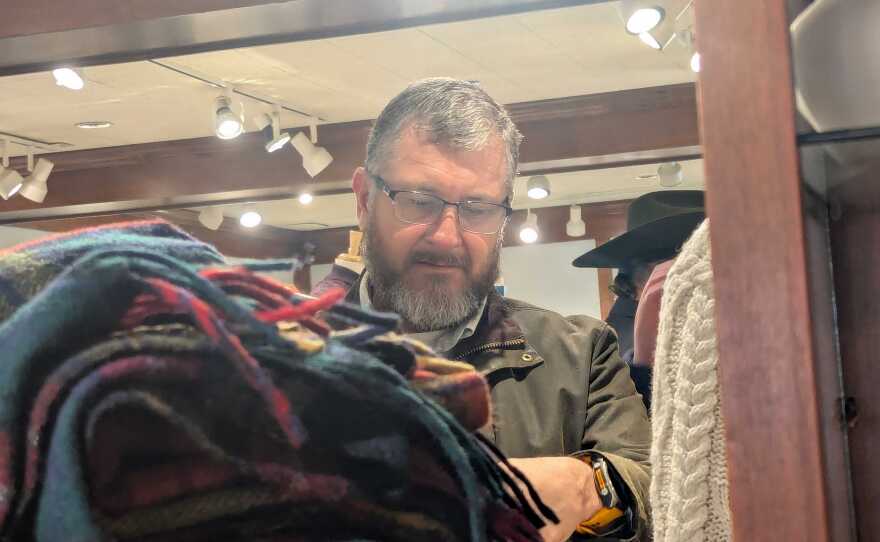
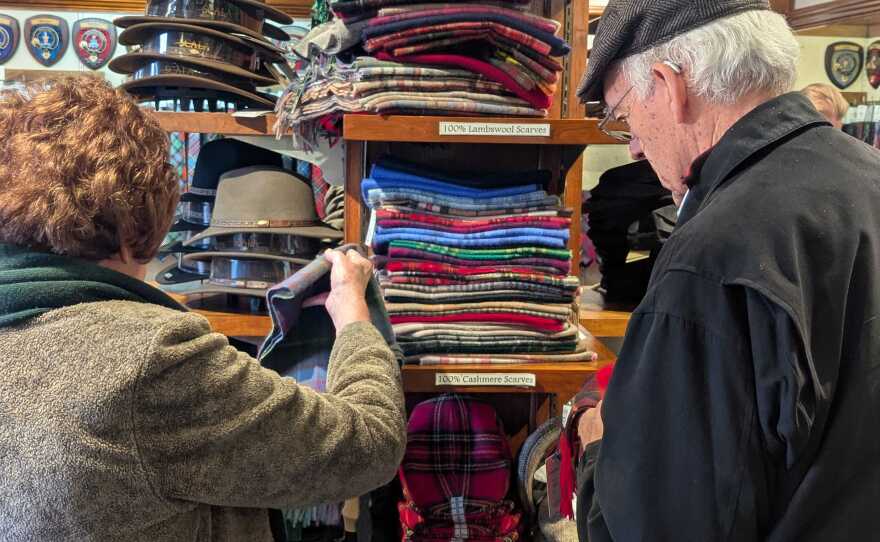
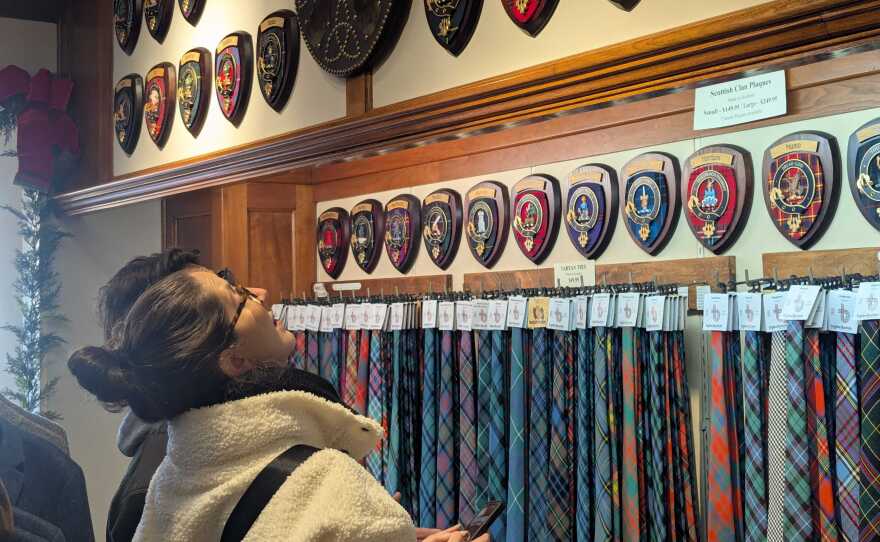
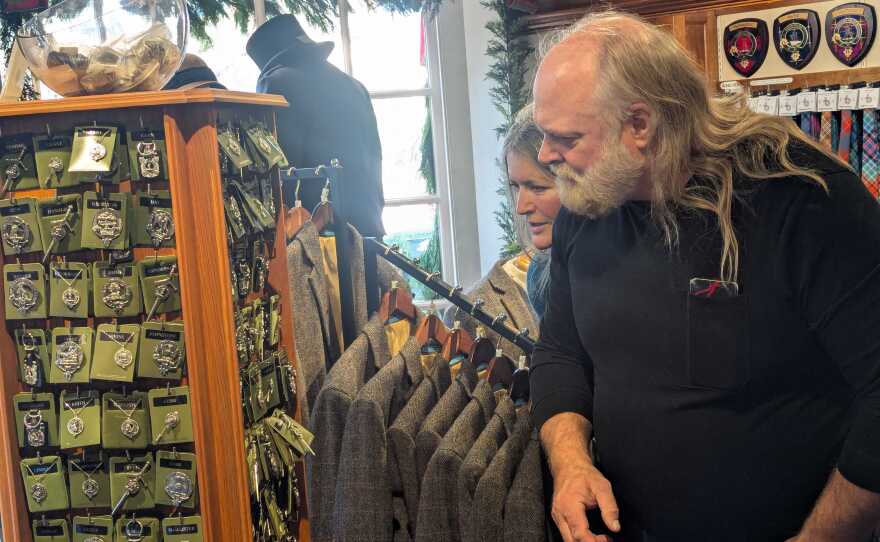
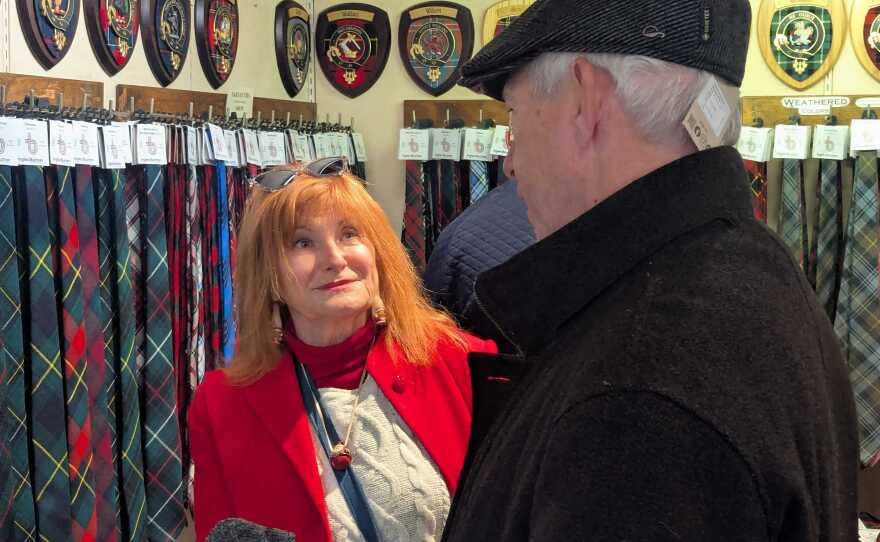
The staff find many visitors are looking for a piece of themselves.
“Kind of reaching to that self-actualization where you're trying to find something a little more about you, or maybe one of your grandmother's lines that you didn't know before,” Stello said. “It's fun to be, in a small way, part of that.”
Stello said the store can feel like a neighborhood pub, conversations about family often pouring out of guests when he stops to help.
“A lot of times people will find something in the store that they like,” Stello said. “Other times they just say ‘well, oh, I really would like to have a kilt’ or ‘I'd really like to have a lady shawl,’ or something like that and we just custom order it” using swatch books from the weavers in Scotland.
Family is what helped Will Hicks, visiting from Cape Cod, Massachusetts, through the door.
“My mother's maiden name is Bean, she talks a lot about wanting to sort of connect with those Irish roots a little bit,” Hicks said, holding a red plaid fabric adorned with green and white. “So to see this McBean tartan here, I was like ‘I'm gonna get this and bring it back for her.’”
Stello said visitors from Scotland and Ireland can find Americans’ draw to sometimes distant relatives funny or confusing. He reminds them that they can look at their homes and countryside and see a constant reminder of their connection to their ancestors.
“We have to bridge back,” Stello said of Irish and Scottish Americans. When he explains that, they often start to understand.
“Suddenly you see that your story is our story.”

A significant number of Ulster Scots – Scottish people who emigrated to Northern Ireland – made their way to North American colonies, including Virginia. More than 45 million Americans claim Irish or Scottish heritage. Scottish-born people were also prominent in 18th-century Williamsburg, from Royal Governor John Dunmore to Declaration of Independence publisher and newspaperman Alexander Purdie.
Stello said Scotland House can be that midpoint between personal and early American history, fitting nicely into the environment created by nearby Colonial Williamsburg.
“I had a history professor say one time that America is not really a melting pot. It's actually a bag of mixed nuts, basically; we're all here together, but we have these different cultures we get to borrow from and use and enjoy, and I think that's something very special and very American.”
