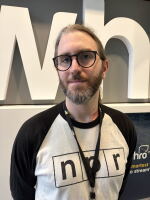
Cell phone service in Williamsburg is “still not very good,” according to Chief Information Officer Mark Barham.
That’s no surprise to residents. And though the city continues to talk about solutions, improving coverage is largely out of the locality’s hands.
“We know best where our issues are in the city,” Barham said in a Thursday report to City Council. The hard part, however, is getting “the carriers to really listen to us” and install new infrastructure.
“That would go a long way,” Barham said.
All major carriers serve Williamsburg, but much of the city experiences poor and middling reception.
T-Mobile leads the way as the only provider that reaches the whole city with 5G service and has median download speeds of 232 megabytes per second, according to the city. Verizon’s 5G signal only reaches 45% of the city and has median download speeds of 61 megabytes per second. At&T is the least used of the three, only reaching 93% of the city with 4G service and 46% with 5G, with median download speeds of 83 megabytes per second.
The locality’s somewhat unique characteristics play a role in the problem. Tourism can bog down service. Dense trees weaken signals, as do Williamsburg’s historic brick and plaster buildings and leaded windows; plus architectural restrictions in historic areas limit towers and push smaller antennas outside of core areas.
“Our need is really in the downtown area,” Barham said. “That’s where we really want them, CW and William & Mary to work with us to identify sites that are amenable to them and that work for us to improve that service in that area.”
The problems aren’t new information for city leaders. Barham made a similar presentation in 2024 after receiving the results of a propagation study that year. But he’s struggled at times to even reach carriers’ representatives.
“There is very, very little influence, if any, the city has with cell phone companies,” Barham said. “I have tried and tried and tried; as has William & Mary, as has Colonial Williamsburg.”
The city has been able to make some progress getting companies to adjust antennas to fix some weak spots in recent years. Significant improvements, however, would require more small cell antennas in high-traffic places. Barham said he’s continuing to negotiate with Crown Castle, which did the city’s 2024 cell reception study, to put them on city property.

“My thought is the new library,” he said. “There’s ways we can plan for it and disguise it enough to where it’s nice, but it provides that effective coverage.”
Barham also floated the possibility of allowing low-visibility antennas in historic districts. He said five to 10 in the downtown core would likely make a noticeable difference. Mayor Doug Pons said it may be time to evaluate that idea more seriously.
“I know that they want to put another cell antenna on one of our water towers,” he said. “How do we leverage that to say ‘Yes, you can do that, but we would like you to put small cells up around town as part of that contract?’”
Williamsburg currently allows companies to apply to put small cell antennas on city infrastructure and streetpoles in non-critical areas. But the city has also been replacing many of its poles with underground infrastructure.
“A lot of the poles don’t belong to the city, they belong to Dominion,” said Christina Shelton, city attorney. “So that makes it a little bit challenging.”